
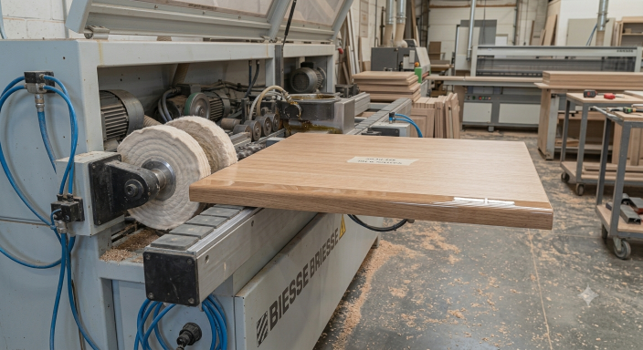
Run a fingertip along the edge of a well-made cabinet door, and you genuinely won’t feel where the panel ends and the banding begins. Run it along a poorly finished one, and that seam announces itself immediately: a small ridge, a rough patch, something that just feels unfinished. An Edge Banding Machine with Trimming and Buffing is what separates these two outcomes, and understanding how these final stages work helps manufacturers consistently deliver the first result rather than the second.
Why Trimming and Buffing Matter So Much
Gluing banding material onto a panel edge is really only half the job. Excess material overhangs both the top and bottom of the panel after bonding, and without proper trimming, that overhang remains rough, uneven, and visually unprofessional.
What happens during the trimming stage:
- Excess banding material gets precisely cut flush with the panel surface.
- Sharp cutting heads follow the exact panel contour, including any curves.
- Both top and bottom overhangs get addressed in a single pass, typically.
- Consistent depth control prevents cutting into the actual panel material.
Skipping or rushing this stage leaves visible ridges along the edge, exactly the kind of flaw that turns an otherwise well-built piece of furniture into something that looks distinctly amateur.
The Precision Required During Trimming
Trimming heads need to follow the panel’s exact profile, including any curves or contours, without deviating even slightly. A trimming unit set even marginally incorrectly either leaves excess material behind or cuts too deep into the panel itself, both equally problematic for the final appearance.
Understanding the Buffing Process
Once trimming removes excess material, buffing takes over to smooth out any remaining roughness and create that seamless transition between banding and panel surface.
What buffing accomplishes specifically:
- Smooths minor imperfections left behind after the trimming stage
- Removes fine burrs that trimming alone sometimes cannot fully eliminate
- Creates a seamless tactile transition between banding material and panel surface
- Prepares the surface for any additional finishing like polishing or coating
Without adequate buffing, even a well-executed trimming job can leave behind subtle roughness, something a customer might not immediately notice visually but will definitely feel when running a hand along the edge.
Why Buffing Wheel Quality Affects Final Results
Buffing wheels wear down over continuous use, and a worn wheel produces noticeably inferior results compared to a fresh one. Manufacturers sometimes delay replacing these components to save on minor recurring costs, not realising that this false economy shows up directly in finish quality across every single panel processed afterwards.
Common Finish Problems and Their Actual Causes
Recognising what’s actually causing a finish problem saves considerable time compared to guessing and adjusting settings randomly.
Frequent issues and their typical root causes:
- Visible ridge along the edge, usually trimming depth set incorrectly.
- Rough or scratchy feel despite trimming, generally insufficient buffing pressure or worn buffing material
- Uneven finish across a single panel, often inconsistent feed speed during processing
- Small chips at panel corners, typically trimming blades that need sharpening or replacement.
Working through this list systematically, rather than adjusting multiple settings simultaneously, helps isolate the actual problem faster and avoids introducing new inconsistencies while chasing the original issue.
Why Feed Speed Consistency Matters Throughout Processing
Panels moving through the trimming and buffing stages at inconsistent speeds produce noticeably uneven results, even when all the machine settings themselves remain correct. Operators rushing panels through, particularly toward the end of a long shift, often introduce this exact problem without realising it.
Choosing Machinery With Reliable Trimming and Buffing Units
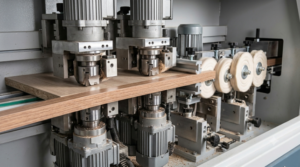
Not every edge banding machine handles these final stages with equal precision, and this genuinely affects daily output quality more than manufacturers sometimes expect.
Features worth prioritising when evaluating machines:
- Adjustable trimming depth control, allowing fine-tuning for different material thicknesses
- Quality buffing wheels that maintain consistent contact pressure
- Easy access for cleaning and component replacement without extensive downtime
- Consistent feed mechanisms that maintain steady panel speed throughout processing
Cheaper machines occasionally cut corners specifically in these finishing components, since they’re less immediately visible than the gluing system, but the impact on final output quality is just as significant.
Balancing Speed Against Finish Quality
Production pressure sometimes pushes operators to increase feed speed beyond what trimming and buffing units can properly handle. This trade-off rarely works out favourably, since rushed processing produces inconsistent finish quality that often requires manual rework anyway, ultimately costing more time than running at a proper, controlled pace from the start.
Maintenance Practices That Protect Finish Quality
Both trimming and buffing components require specific ongoing attention separate from general machine maintenance.
Maintenance routines worth building into daily and weekly schedules:
- Daily inspection of trimming blade sharpness before starting production
- Regular cleaning of buffing wheels to remove accumulated dust and residue
- Weekly checks on trimming depth calibration across different material thicknesses
- Prompt replacement of worn buffing material rather than extending its use unnecessarily
Consistent attention to these details prevents the gradual quality decline that often goes unnoticed until customer feedback reveals a pattern of complaints about rough or inconsistent edges.
Training Operators for Consistent Results
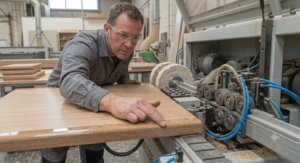
Even excellent machinery depends on properly trained operators to deliver consistent finish quality across every production run.
Key training points worth emphasising:
- Recognising early signs of blade wear before it visibly affects output.
- Maintaining consistent, appropriate feed speed regardless of production pressure
- Understanding when buffing pressure needs adjustment for different materials
- Conducting regular visual and tactile quality checks throughout a shift, not just at the end
Conclusion
Achieving a genuinely professional finish depends heavily on proper trimming and buffing, stages that often receive less attention than the gluing process but affect final quality just as significantly. Careful machine selection, consistent maintenance, and well-trained operators together produce the smooth, seamless edges that distinguish quality furniture from amateur output. At Garnet India, we help manufacturers select edge banding machinery with reliable trimming and buffing systems that consistently deliver the professional finish their customers expect.
Frequently Asked Questions
What causes a visible ridge along a banded edge after processing?
This typically results from incorrect trimming depth settings, which leave excess material behind or occasionally cut slightly into the panel surface itself.
How often should buffing wheels be replaced?
Replacement frequency depends on production volume, though regular inspection for wear and reduced effectiveness helps determine the right schedule for your specific operation.
Does feed speed really affect finish quality that much?
Yes, inconsistent or excessive feed speed frequently produces uneven trimming and buffing results, even when all other machine settings remain correctly configured.
Can rough edges be fixed manually after the machine process is complete?
Manual touch-up is possible but time-consuming, making proper machine calibration and operator training a more efficient long-term solution than routine manual corr