
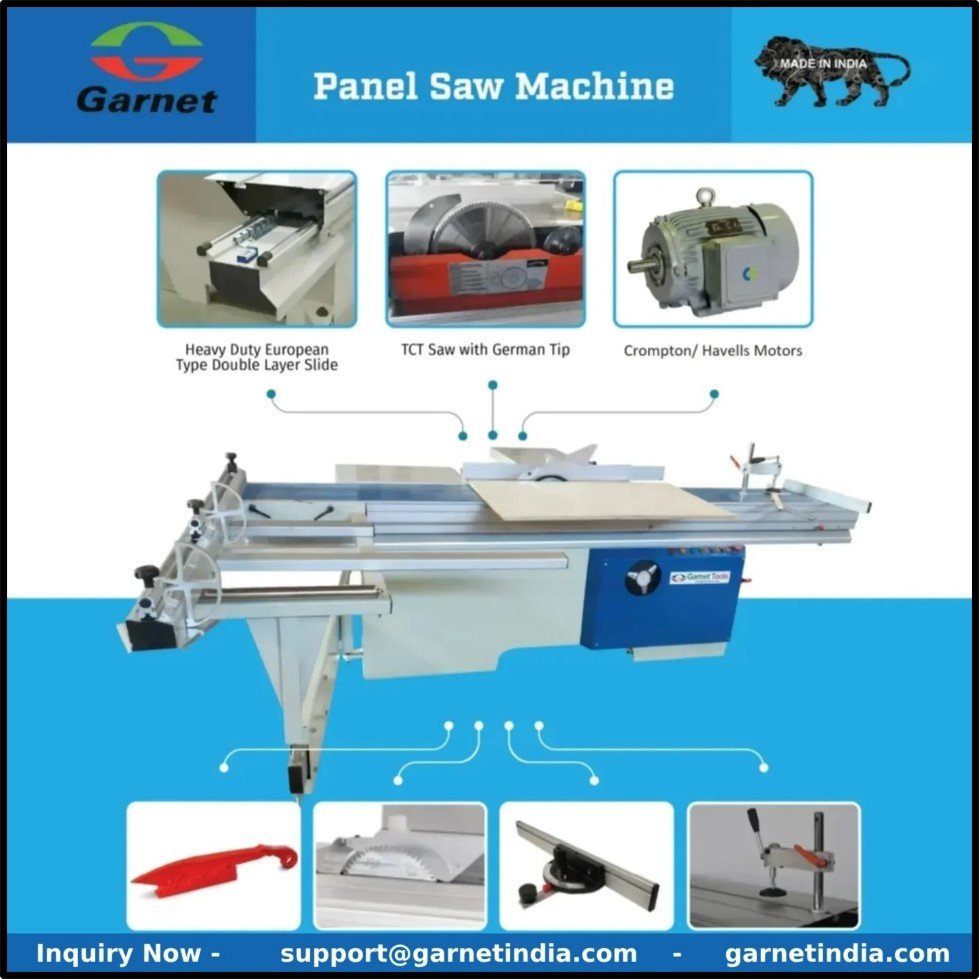
A decade ago, a factory owner looking to scale up modular furniture production had a very predictable playbook. They would look past domestic machinery and buy a flashy imported cutting system from Europe or East Asia, assuming it was the only way to get true precision. Today, that trend has completely flipped on its head on Indian shop floors. A massive shift is underway, and domestic workshops are realizing that a heavy-duty panel saw made in India offers better long-term reliability, quicker parts turnaround, and a far healthier bottom line. Choosing domestic engineering has evolved from a patriotic gesture into a highly strategic financial decision.
This analysis details the exact operational reasons why domestic Special Purpose wood working machines is outperforming imported models in actual factory conditions across the country.
The Costly Nightmare of Imported Electronic Downtime
Imported industrial sizing units look incredible on paper with their computerized touchscreens and fully automated alignments. However, those delicate electronics are often designed for climate-controlled European plants, not the rugged, dust-heavy, and power-fluctuating environments of typical Indian manufacturing clusters. A minor voltage spike can fry a proprietary motherboard instantly.
When an imported system breaks down, your production line stops dead in its tracks. You are suddenly at the mercy of overseas shipping timelines, customs clearances, and exorbitant international technician fees just to get a basic diagnostic code cleared. A machine sitting idle for three weeks waiting for a single sensor can easily wipe out an entire month of factory profit.
Domestic machinery builders approach engineering with local shop conditions in mind. They build systems using robust, locally sourced electrical components and heavy mechanical parts that any local industrial electrician can service in a couple of hours.
Structural Iron vs. Lightweight Sheet Metal
A major structural difference between domestic hardware and cheap imported alternatives is the sheer volume of cast iron used in the internal framing. To save on international sea freight costs, many foreign manufacturers minimize the weight of their machines, utilizing thinner sheet metal structures that flex under heavy industrial loads.
Indian manufacturers do not have to worry about cross-ocean shipping weights, so they build machines with thick, heavy iron beds. This massive weight completely dampens the motor vibrations that naturally occur when slicing through dense plywood or pre-laminated particle boards.
The Clear Advantages of Local Machine Layouts
- Immediate spare part availability: Belts, bearings, motors, and scoring blades can be sourced from local industrial hubs within the same afternoon.
- Heavy mechanical reliance: Fewer over-complicated software locks mean your internal team can handle routine maintenance without needing overseas software updates.
Eliminating unnecessary software dependencies ensures that your primary cutting station stays up and running through intense double shifts without unexpected digital glitches.
The Evolution of Local Manufacturing Standards
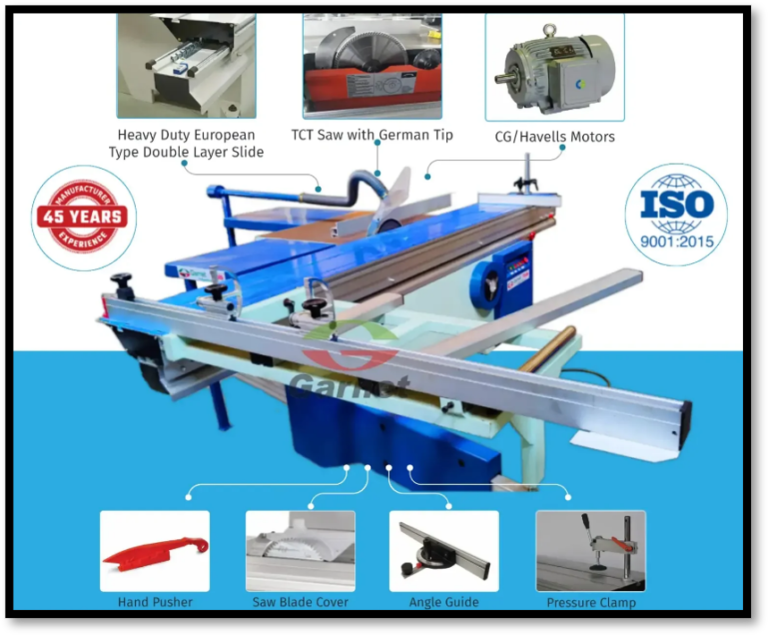
The domestic wood machining industry has evolved significantly from a fragmented market of small fabricators into a sector known for precision and reliability. Today, leading Indian manufacturers produce panel saws that deliver consistently smooth, chip-free cuts, demonstrating that locally manufactured equipment can meet international performance standards. Modern machines incorporate advanced linear guide tracks and dual-blade cutting systems to ensure exceptional cutting accuracy.
A smaller scoring blade first trims the bottom laminate layer before the larger main blade cuts through the wood panel. This dual-cutting process prevents chipping and creates clean, perfectly square edges that are ideal for seamless Automatic edge banding with premilling and corner rounding. The result is a high-quality finish comparable to premium international machinery while offering greater cost efficiency and long-term value.
Action Plan for Upgrading Your Cutting Floor
Transitioning your factory away from a reliance on foreign equipment requires a practical look at your operational costs.
- Calculate true downtime costs: Track how much money you lose per hour whenever an imported machine is waiting on a specialized foreign component.
- Compare local build weights: Look closely at the physical weight of machines when comparing models, as a heavier build directly translates to better cutting accuracy.
Securing Long Term Workshop Profitability
Investing in the right workshop equipment is always an exercise in calculating the total cost of ownership over a five to ten-year period. While foreign marketing brochures make big promises regarding automated speeds, the reality of factory management is that reliability always beats complexity. Opting for locally engineered machinery means you are buying a system built for your specific working conditions, backed by technicians who speak your language and can arrive at your facility the next morning.
Conclusion
Keeping your initial capital expenditure realistic while guaranteeing zero production interruptions is the ultimate secret to scaling a furniture brand. Choosing heavy-duty domestic infrastructure protects your daily output and ensures your factory floor stays agile, profitable, and highly competitive. Garnet India designs and distributes robust, high-precision industrial woodworking systems that bring world-class cutting efficiency directly to Indian furniture factories without the burden of imported supply chain delays.
Frequently Asked Questions
Why are domestic cutting machines more reliable in local industrial areas?
Domestic systems are engineered to withstand local power fluctuations and high dust environments, utilizing heavy mechanical designs over fragile electronics.
How quickly can a workshop get replacement parts for a domestic sizing machine?
Since the manufacturing units and components are located within the country, most critical spare parts can be delivered and fitted within twenty-four hours.
Do domestic wood sizing units provide chip-free cuts on pre-laminated boards?
Yes, high-grade domestic systems feature a dual-blade setup where a smaller blade cuts the laminate before the main blade cuts the panel core.
What makes heavy cast-iron machine construction superior to thin sheet metal?
Heavy iron absorbs the high-frequency vibrations caused by high-RPM motors, ensuring the blade stays perfectly straight and does not chip brittle board surfaces.