
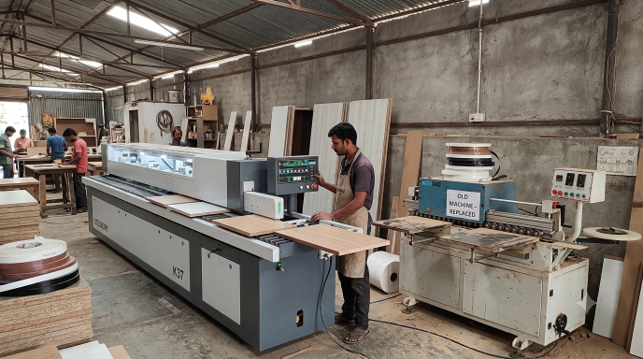
A workshop owner in Nagpur kept pushing back the decision for nearly two years, telling himself the semi-automatic setup was “good enough for now.” By the time he finally upgraded, he’d already lost two bulk orders to competitors who could deliver faster. Recognising the right moment to invest in an Automatic Edge Banding Machine matters just as much as the machine itself, and waiting too long often costs more than the equipment ever would.
The Signs Your Workshop Has Outgrown Manual Methods
Before jumping into equipment specifications, it helps to recognise the actual warning signs that indicate manual or semi-automatic banding is holding your business back.
Common indicators worth paying attention to:
- Consistent delays in fulfilling bulk or repeat orders on time
- Noticeable inconsistency in finish quality across different workers
- Rising labour costs that no longer feel proportionate to output.
- Difficulty scaling up production when demand genuinely increases
None of these signs alone necessarily means an immediate upgrade is essential, but when several appear together, they usually point toward the same underlying conclusion.
Why Business Owners Often Delay This Decision Longer Than They Should
Familiarity with existing processes creates a certain comfort, even when that process is genuinely limiting growth. Workshop owners often underestimate how much manual banding actually costs in labour hours and inconsistent output until they calculate the numbers properly against what automation would realistically save.
Calculating When Automation Genuinely Pays Off
This decision shouldn’t rest on gut feeling alone, and running actual numbers usually reveals a clearer picture than assumptions do.
Key figures worth calculating before deciding:
- Current labour cost dedicated specifically to edge banding tasks monthly
- Rework expenses from inconsistent manual quality requiring correction
- Lost order value from delays caused by production bottlenecks
- Projected automatic machine cost, including financing if applicable
Comparing these figures honestly, rather than focusing solely on the upfront machine price, often reveals that automation pays for itself faster than initially assumed, sometimes within the first year of consistent use.
The Hidden Cost of Staying Manual Too Long
Beyond direct labour costs, manual methods carry hidden expenses that rarely show up clearly on a balance sheet: missed deadlines damaging client relationships, inconsistent quality affecting reputation, and skilled workers spending time on repetitive tasks that automation could easily handle instead.
Production Volume Thresholds Worth Considering
While every workshop differs, certain volume patterns generally indicate automation has become genuinely worthwhile rather than merely nice to have.
Volume indicators suggesting it’s time to upgrade:
- Daily panel processing consistently exceeds what current staff can comfortably handle.
- Order backlogs regularly extend beyond acceptable delivery timelines.
- Adding more manual workers no longer proportionally increases output.
- Seasonal demand spikes consistently overwhelm existing manual capacity.
Workshops processing a modest, steady volume with no growth pressure genuinely may not need to rush this decision. Those experiencing consistent or growing demand, however, typically benefit from making the transition sooner rather than later.
Why Growth Trajectory Matters More Than Current Volume Alone
A workshop currently managing fine with manual methods but experiencing steady month-over-month growth should factor that trajectory into the decision, not just present circumstances. Retrofitting production capacity during a growth phase often costs more, in terms of both money and missed opportunity, than planning the transition proactively.
Quality Consistency as a Deciding Factor
Beyond pure volume considerations, quality consistency issues frequently push businesses toward automation even when current output technically meets demand.
Quality-related signs worth recognising:
- Customer complaints specifically about inconsistent edge finish or peeling
- Noticeable variation between panels produced by different workers
- Increasing time spent on manual touch-up and correction work
- Difficulty meeting quality standards required by larger commercial clients
Larger commercial clients, particularly those in hospitality or retail furniture supply, often have stricter consistency requirements than individual residential customers. Meeting these standards reliably through manual methods alone becomes increasingly difficult as order sizes grow.
How Automation Addresses Consistency Directly
An automated system removes the variable of individual worker technique from the equation entirely; every panel receives the same glue temperature, pressure, and trimming precision regardless of which shift or operator handled it. This consistency becomes genuinely valuable once client expectations around quality tighten.

Financial Readiness and Timing Considerations
Recognising the need for automation doesn’t automatically mean the timing is financially right, and honest assessment here prevents strain on cash flow during the transition.
Questions worth answering before committing:
- Does current cash flow comfortably support the investment without straining other operations?
- Are financing options available that match your business’s repayment capacity?
- Is there a specific busy season approaching where the transition might cause disruption?
- Have you budgeted adequately for installation, training, and the initial adjustment period?
Timing the purchase around a slower production period, rather than during peak season, generally allows for smoother installation and operator training without disrupting existing order commitments.
Planning the Transition Without Disrupting Current Operations
A gradual transition, running both methods briefly in parallel while operators gain confidence with the new equipment, often works better than an abrupt complete switch. This overlap period allows troubleshooting without risking missed deadlines on existing orders already in progress.
Making the Decision With Confidence
Ultimately, this decision comes down to honestly weighing current pain points, growth trajectory, and financial readiness together, rather than waiting for a single obvious moment that rarely arrives clearly on its own.
Conclusion
Recognising when to upgrade comes down to honestly evaluating production bottlenecks, quality consistency issues, and genuine growth trajectory, rather than waiting until competitive pressure forces the decision. Workshops that plan this transition proactively generally fare better than those that delay until problems become unavoidable. At Garnet India, we help manufacturers evaluate their specific production situation and choose the right timing and equipment for a smooth transition into automation.
Frequently Asked Questions
How long does it typically take for an automatic machine to pay for itself?
This varies by workshop volume, though many businesses see meaningful returns within the first one to two years through labour savings and reduced rework.
Should I upgrade even if my current manual output technically meets demand?
If growth is anticipated or quality consistency issues exist, proactive upgrading often costs less than reactive upgrading once problems become unavoidable.
Is it possible to run manual and automatic methods together during transition?
Yes, many workshops run both briefly in parallel, allowing operators to gain confidence with new equipment without disrupting existing order commitments.
What’s the biggest mistake workshops make when timing this upgrade?
Waiting too long until competitive pressure or client complaints force the decision, rather than proactively planning based on growth trajectory and cost analysis.