
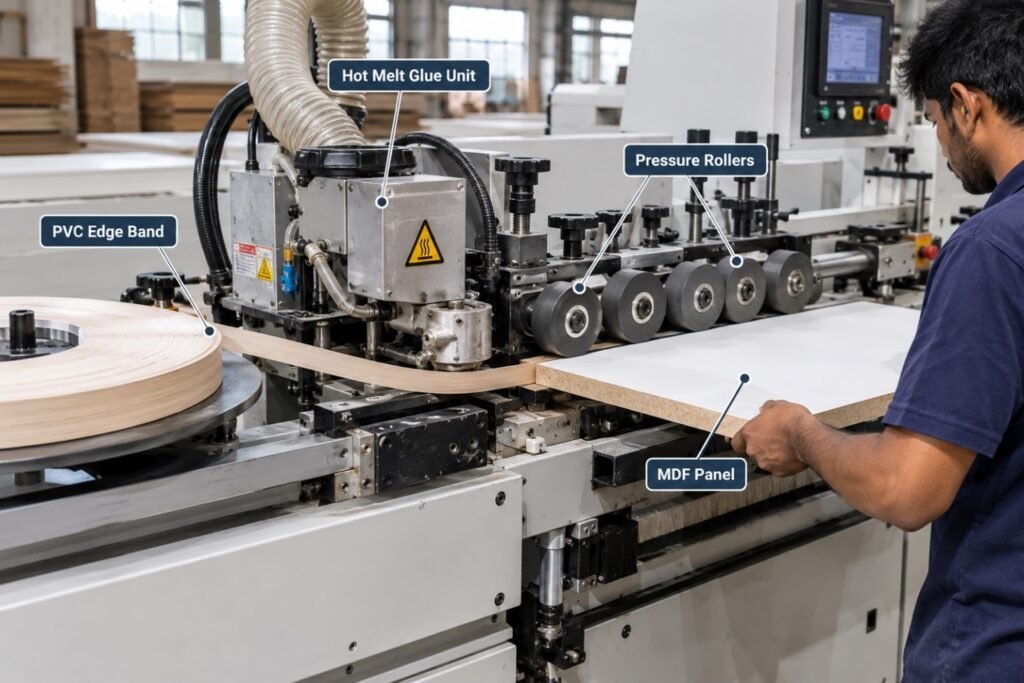
A panel returned from a client last year, edge banding peeling at one corner after barely three months of normal use. The culprit wasn’t the banding material itself; it was the glue system behind it. A properly configured Hot Melt Glue Edge Bander solves exactly this kind of problem, and understanding why it matters helps manufacturers avoid the same costly rework.
What Makes Hot Melt Glue Different
Hot melt glue works through a straightforward principle: solid adhesive granules or sticks melt under heat, get applied to the panel edge while molten, then cool and harden almost instantly once pressed against the banding material. This speed and reliability are exactly why it dominates furniture manufacturing today.
Key characteristics that define hot melt adhesive systems:
- Rapid setting time, allowing continuous production without long pauses
- Strong initial tack, holding banding material firmly during the pressing stage
- Consistent viscosity when properly heated, ensuring even application
- Compatibility with a wide range of banding materials, PVC, veneer, and ABS
Compared to older adhesive methods requiring lengthy drying times, hot melt systems fundamentally changed how quickly furniture production lines could operate.
Why Temperature Control Matters So Much
Getting bond quality right depends heavily on maintaining correct glue temperature throughout the production run. Glue applied too cold sets before proper bonding occurs; glue applied too hot risks weakening the adhesive’s structural properties or damaging sensitive banding materials.
How Bond Strength Actually Improves With Proper Application
Bond strength isn’t just about using the right glue; it’s about the entire system working together correctly, with temperature, pressure, and application timing all playing a role.
Factors directly affecting final bond strength:
- Consistent glue temperature, maintained throughout the entire production run
- Adequate pressure application, ensuring full contact between banding and panel edge
- Proper glue quantity, neither too thin nor excessively thick along the edge
- Panel edge preparation, clean and properly milled before glue application begins.
Skipping proper edge preparation, in particular, undermines even the best glue system available. A poorly milled edge creates gaps that no amount of quality adhesive can fully compensate for.
The Role of Pressure Rollers in Final Bond Quality
After glue application, pressure rollers press the banding material firmly against the panel edge while the adhesive is still workable. Insufficient pressure here leads to weak spots along the bond line, exactly the kind of failure that shows up as peeling months later, once the furniture has already reached a customer.
Finish Quality Beyond Just Strong Bonding
Strong adhesion matters enormously, but finish quality involves additional factors that manufacturers often overlook when focusing purely on bond strength.
Elements contributing to genuinely clean finish quality:
- Excess glue trimmed cleanly without leaving visible residue along edges.
- Smooth transition between banding material and panel surface
- Consistent colour matching between glue lines, particularly noticeable on lighter materials
- Proper scraping and buffing after the bonding process completes
A machine with poor trimming precision leaves behind small glue lines visible even after the banding material has properly adhered, undermining the overall professional appearance of finished furniture pieces.
Why Glue Colour Selection Affects Perceived Quality
Manufacturers sometimes overlook glue colour matching, assuming any standard hot melt adhesive works universally. On lighter coloured banding materials, mismatched glue colour occasionally shows through as a faint line, something a discerning customer notices immediately, even if the actual bond strength remains perfectly sound.
Choosing the Right Machine for Consistent Results
Not every edge banding system handles hot melt glue application with equal precision, and this difference genuinely affects daily production quality.
Features worth prioritising for reliable glue application:
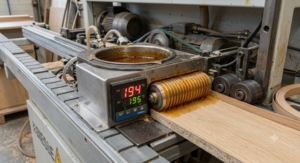
- Precise temperature control systems, ideally with digital readout and adjustment
- Consistent glue feed mechanisms, avoiding drips or uneven application
- Quality pressure rollers maintaining even contact across the entire panel edge.
- Easy access for regular cleaning, since glue residue buildup affects performance over time
Cheaper machines sometimes cut corners specifically in temperature regulation, leading to inconsistent results that only become obvious once panels reach the trimming and finishing stage.
Maintenance Practices That Protect Bond Quality
Routine maintenance steps that directly protect output quality:
- Daily cleaning of glue application nozzles and tanks before residue hardens
- Regular calibration checks on temperature control systems
- Periodic inspection of pressure rollers for wear or uneven surface contact
- Prompt replacement of worn components rather than delaying repairs
Neglecting these routine tasks gradually degrades bond quality, often so slowly that manufacturers don’t notice until customer complaints start accumulating.
Common Problems and Their Practical Solutions
Even well-maintained systems occasionally run into issues, and recognising the cause quickly prevents wasted material and rework.
Frequent bonding problems and their typical causes:
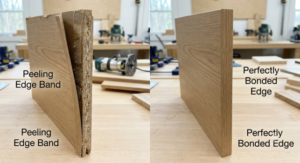
- Peeling edges, usually insufficient temperature or inadequate pressure during application
- Visible glue lines, often mismatched colour or excess glue not properly trimmed.
- Inconsistent adhesion across a single panel, typically uneven glue distribution
- Bubbling under the banding material, generally trapped air from improper pressing technique.
Identifying which specific symptom is occurring helps narrow down the actual fix needed, rather than guessing at solutions that may not address the genuine root cause.
Getting the Most From Your Investment
Manufacturers investing in quality edge banding equipment naturally want that investment to translate into consistently strong, clean results across every production run. This comes down to combining the right machine, properly maintained, with correct operational practices followed consistently by trained staff.
A practical checklist for consistent quality:
- Verify temperature settings match the specific glue type being used.
- Confirm pressure roller alignment before starting each production batch.
- Inspect finished panels regularly, not just at the end of a shift.
- Address minor issues immediately rather than allowing them to compound.
Conclusion
A properly configured hot melt glue edge banding system genuinely transforms both bond strength and finish quality, provided temperature control, pressure application, and routine maintenance receive consistent attention throughout daily operations. Getting these fundamentals right prevents costly rework and protects your reputation for reliable, professional furniture output. At Garnet India, we help manufacturers select and maintain edge banding systems that deliver strong, clean bonds consistently, batch after batch.
Frequently Asked Questions
What causes edge banding to peel after installation?
Peeling typically results from insufficient glue temperature or inadequate pressure during application, both of which prevent proper adhesion between the banding and panel edge.
How often should glue tanks be cleaned on a hot melt system?
Daily cleaning is recommended, since residue buildup affects application consistency and can eventually clog nozzles or reduce overall bond quality over time.
Does glue colour actually affect furniture quality?
It affects perceived quality significantly, since mismatched glue colour can show through lighter banding materials, even when the actual bond strength remains completely sound.
What is the most common mistake manufacturers make with hot melt glue systems?
Neglecting routine temperature calibration and cleaning ranks highest, since gradual degradation often goes unnoticed until customer complaints reveal inconsistent bonding quality.