
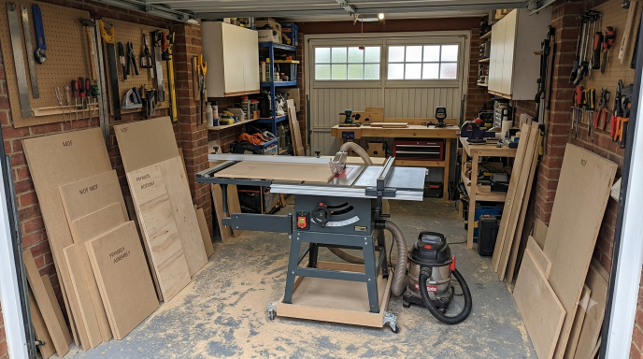
A carpenter working out of a converted garage in Meerut once managed with hand tools alone for nearly six years, telling himself a proper cutting machine simply wouldn’t fit his space. That assumption changed the day he discovered options built specifically for exactly this kind of constraint. A Mini Panel Saw Machine genuinely closes that gap, bringing real cutting precision into workshops where a full-sized industrial saw simply has no room to exist.
Why Small Workshops Have Different Needs
Larger factories plan around continuous production and dedicated floor zones for each machine. Small furniture workshops rarely have that luxury; space gets shared between cutting, assembly, finishing, sometimes storage too, all within a single modest room.
What makes compact equipment genuinely necessary here:
- Limited floor space that a full-sized sliding table saw simply cannot occupy.
- Variable daily workload, some days needing cutting, others not at all
- Lower capital available compared to larger manufacturing operations
- A need for equipment that doesn’t demand a dedicated, permanent installation zone
None of this means small workshops should settle for lower quality output. It simply means the equipment needs to match the physical and financial reality these businesses actually operate within.
Who Typically Benefits Most From This Category
Independent carpenters, small custom furniture makers, and workshops handling occasional rather than continuous bulk orders find mini panel saws particularly well suited. A large factory running multiple shifts daily has fundamentally different requirements, but that scale simply doesn’t describe most small workshop operations across India.
Core Features Worth Understanding
Before assuming smaller automatically means less capable, it helps to understand what these machines genuinely offer and where their practical limitations actually sit.
Features commonly found in mini panel saw designs:
- Reduced footprint, fitting comfortably within limited workshop corners
- Manual or semi-automatic operation, keeping cost accessible for smaller budgets
- Adequate cutting capacity for standard residential furniture panel sizes
- Simplified control systems, easier for a single operator to manage independently
A well-built mini saw maintains genuine cutting accuracy despite its smaller size; the reduction happens in footprint and maximum capacity, not necessarily in fundamental precision.
Where Genuine Limitations Exist
Realistic boundaries worth understanding upfront:
- Lower maximum panel size compared to full-sized industrial machines
- Reduced daily throughput suited to smaller workshop demand levels
- Fewer advanced automation features in more basic, budget-friendly models
- Less suited to continuous high-volume bulk production runs
Recognising these boundaries honestly prevents disappointment later. A mini panel saw solves genuine problems for its intended use case, but expecting factory-level output from compact equipment sets unrealistic expectations from the start.
Choosing the Right Mini Saw for Your Workshop
Not every compact machine on the market delivers equally reliable results, and understanding what separates a genuinely good option from a disappointing one saves considerable frustration after purchase.
Elements worth prioritising during evaluation:
- Stable base construction, ensuring accuracy despite the smaller overall footprint
- Quality blade and motor combination, avoiding excessive vibration during cutting
- Adequate safety features, including blade guards appropriate for the machine’s scale
- Availability of spare parts and basic servicing support in your region
A machine reduced in size but genuinely built with quality components will consistently outperform a larger, cheaper alternative that cuts corners on the fundamentals.
Balancing Compact Size With Genuine Cutting Accuracy
Some manufacturers reduce cost specifically by weakening the base stability or using thinner frame material, both of which directly affect cutting accuracy regardless of the machine’s overall size. A genuinely well-designed mini saw maintains a solid, stable foundation even within its compact form factor.
Setting Up a Mini Panel Saw Correctly
Getting real value from compact equipment requires proper setup, even within a modest workshop footprint.
Practical steps for effective installation:
- Identify a stable, level surface with adequate surrounding clearance.
- Confirm electrical supply matches the machine’s specific power requirements.
- Allow sufficient space for panel feeding and safe operator movement.
- Establish a simple, consistent maintenance routine from the very first week of use.
Skipping proper surface stability specifically undermines cutting precision considerably, even with an otherwise well-built machine. An uneven or wobbly work surface introduces exactly the inconsistency that a quality machine was meant to prevent.
Maximising a Limited Footprint Effectively
Positioning the machine near a wall with clear access from one side, rather than requiring open space on all sides, often makes the most of genuinely tight workshop layouts. Thoughtful placement matters just as much as the machine’s own compact design when working within limited square footage.
Cost Considerations for Small Workshop Budgets
Mini panel saws typically occupy a considerably more accessible price range compared to full-sized industrial equipment, though costs still vary based on build quality and included features.
Budget factors genuinely worth weighing:
- Initial purchase price relative to your actual, honest production needs
- Ongoing blade replacement and basic maintenance costs over time
- Training time required before achieving consistently accurate results
- Long-term durability given your workshop’s expected usage frequency
A slightly higher investment in a well-constructed mini saw, backed by genuine after-sales support, frequently proves more economical over several years than repeatedly replacing a cheaper unit that fails prematurely under regular daily use.
Making a Confident Choice for Your Workshop
Choosing the right mini panel saw ultimately comes down to honestly assessing your workshop’s actual space constraints, typical production volume, and realistic growth expectations, rather than simply defaulting to whatever option carries the lowest price tag.
Conclusion
A mini panel saw machine offers small furniture workshops genuine cutting precision without demanding the space or investment a full-sized industrial saw requires, provided buyers choose carefully based on build quality rather than price alone. Matching machine choice honestly to actual workshop needs leads to a purchase that serves daily operations reliably for years. At Garnet India, we help small workshop owners find compact panel cutting solutions that fit both their physical space and their genuine production goals.
Frequently Asked Questions
Can a mini saw panel machine deliver cutting accuracy comparable to larger units?
Yes, when properly built with quality components, mini panel saws achieve comparable accuracy for standard panel sizes, though maximum capacity remains lower than industrial machines.
What panel sizes work well with a mini saw panel machine?
Standard residential furniture panel dimensions work well, though extremely large panels typically exceed what compact machines are designed to handle efficiently.
Is a mini panel saw suitable for a workshop planning significant future growth?
It works well initially for smaller volume, though rapidly growing operations should plan for eventual transition to larger equipment as daily production demands increase.
How much floor space does a typical mini saw panel machine require?
Requirements vary by model, but most mini panel saws need considerably less space than full-sized alternatives, often fitting comfortably within a modest workshop corner.