
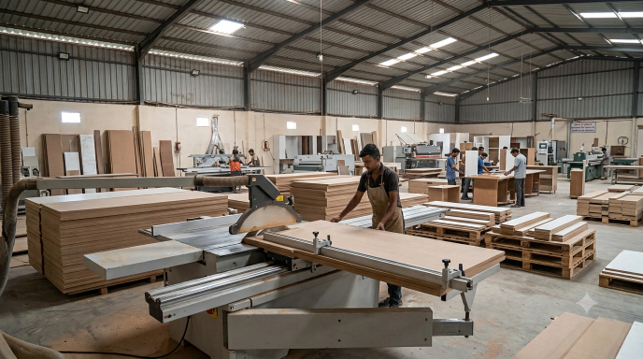
A factory in Rajkot doubled its bulk furniture orders within eighteen months, and the standard panel saw that once handled daily production started showing strain, overheating motors, slower cutting cycles, and occasional misalignment under continuous load. Growth exposed a limitation nobody had anticipated. Investing in a Heavy Duty Panel Saw Machine solves this kind of problem precisely, though the decision genuinely deserves careful evaluation before committing significant capital toward it.
What Actually Separates Heavy Duty From Standard Machines
The term “heavy duty” gets used loosely across marketing materials, so understanding what genuinely distinguishes these machines from standard options matters before evaluating whether the investment makes sense for your operation.
Core differences that define heavy-duty construction:
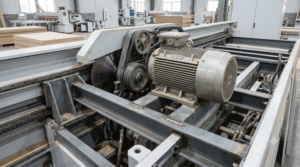
- Reinforced steel frame designed to withstand continuous, high-volume operation
- Stronger, higher-powered motors built for sustained daily use without overheating.
- Enhanced cooling systems preventing performance degradation during long shifts
- Components rated for significantly longer operational lifespan under constant load
A standard machine might technically perform similar cuts, but doing so continuously, shift after shift, exposes weaknesses that only become apparent under sustained pressure rather than occasional use.
Why Standard Machines Struggle Under Continuous Load
Components in standard panel saws are typically designed and tested for moderate, intermittent use patterns. Running these same components continuously for eight or ten hours daily accelerates wear considerably faster than manufacturers originally anticipated, leading to more frequent breakdowns and unplanned downtime.
Signs Your Production Genuinely Needs This Upgrade
Before committing to the higher investment a heavy-duty machine requires, certain indicators help confirm whether this upgrade genuinely matches your current production reality.
Indicators suggesting a heavy-duty upgrade makes sense:
- Current machine experiencing frequent breakdowns or unplanned maintenance stops.
- Production running multiple continuous shifts rather than occasional single-shift use.
- Order volume consistently exceeding what standard equipment comfortably handles.
- Rising repair costs on existing machinery no longer feel economically justified.
If your production genuinely operates within these patterns regularly, rather than occasionally, the case for upgrading becomes considerably stronger than for a workshop running lighter, intermittent volume.
Why Volume Consistency Matters More Than Peak Demand Alone
Occasional demand spikes don’t necessarily justify heavy-duty investment if your typical daily operation remains moderate. This upgrade makes the most financial sense for operations experiencing consistently high volume as their normal baseline, not merely during seasonal peaks that occur a few weeks annually.
Calculating the Real Return on Investment
This decision shouldn’t rest purely on production pain points alone; running actual financial calculations provides a clearer picture of whether the investment genuinely pays off within a reasonable timeframe.
Key figures worth calculating before committing:
- Current downtime costs from breakdowns and repairs on existing equipment
- Labour cost implications of slower cutting cycles on standard machinery
- Projected heavy-duty machine cost, including financing terms if applicable
- Expected reduction in maintenance expenses over the coming years
Comparing these figures honestly against current operational costs often reveals that heavy-duty equipment, despite higher upfront pricing, pays for itself faster than initially assumed once reduced downtime and labour efficiency get factored into the calculation.
The Hidden Cost of Delaying This Investment
Beyond direct repair expenses, frequent breakdowns on inadequate equipment create missed delivery deadlines, damaged client relationships, and lost bulk orders to competitors capable of more reliable output. These indirect costs rarely appear clearly on a balance sheet but genuinely affect long term business growth.
Features Worth Prioritising in a Heavy Duty Machine
Not every machine marketed as heavy duty delivers genuinely equivalent build quality, and understanding what to look for helps separate legitimate options from those using the term primarily for marketing purposes.
Features that genuinely indicate authentic heavy-duty construction:
- Verified motor power ratings suited to continuous, sustained operation
- Reinforced frame construction, ideally with documented steel thickness specifications
- Digital positioning systems maintaining accuracy even under high-volume daily use
- Comprehensive warranty terms specifically covering continuous operational use.
Asking manufacturers directly about these specifics, rather than accepting general marketing claims at face value, helps confirm whether a machine genuinely meets heavy-duty standards or simply carries the label loosely.
Why After-Sales Support Becomes Even More Critical Here
High-volume operations genuinely cannot afford extended downtime while waiting for repairs or spare parts. Choosing a manufacturer with strong local service support and readily available components becomes considerably more important for heavy-duty equipment than for machinery used only occasionally.
Comparing Total Cost of Ownership
The purchase price represents just the starting point when evaluating whether this investment genuinely makes financial sense over the machine’s operational lifetime.
Long term cost factors worth comparing:
- Expected component lifespan under continuous high-volume operation
- Frequency and cost of routine maintenance compared to standard machinery
- Energy consumption differences between heavy-duty and standard motor options
- Resale value considerations if production needs eventually change
A heavy-duty machine’s higher upfront cost often gets offset considerably by reduced breakdown frequency, lower long-term maintenance expenses, and improved consistency across sustained daily production runs.
Making the Investment Decision With Confidence
Deciding whether this upgrade genuinely suits your operation comes down to honestly evaluating current production patterns, growth trajectory, and financial readiness together, rather than assuming either that upgrading is always necessary or that standard equipment will indefinitely suffice.
Conclusion
A heavy-duty panel saw machine genuinely justifies its higher investment for operations running consistent high-volume production, where reduced downtime, improved reliability, and long term cost efficiency outweigh the additional upfront capital required. Workshops experiencing frequent breakdowns or rising repair costs on standard equipment particularly benefit from making this transition proactively. At Garnet India, we help manufacturers evaluate their specific production volume and choose panel saw equipment genuinely built to handle their operational demands reliably.
Frequently Asked Questions
How do I know if my production volume genuinely justifies a heavy-duty machine?
If your operation runs multiple continuous shifts with consistently high daily volume, rather than occasional peaks, the investment typically becomes worthwhile within a reasonable timeframe.
Does a heavy-duty machine require different maintenance compared to standard equipment?
Maintenance principles remain similar, though heavy-duty machines generally tolerate longer intervals between servicing due to their reinforced components and cooling systems.
Is the higher upfront cost of heavy-duty equipment usually recovered quickly?
Many high-volume operations see meaningful returns within one to two years through reduced downtime, lower repair costs, and improved production consistency.
What should I verify before trusting a manufacturer’s heavy-duty claims?
Ask for specific motor power ratings, frame construction details, and warranty terms covering continuous operation, rather than accepting general marketing descriptions alone.