
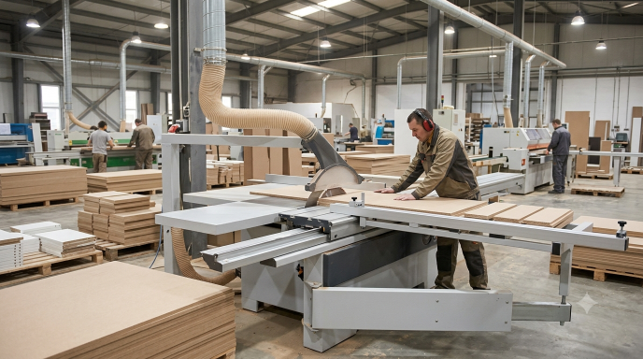
A factory manager in Jalandhar once bought a machine based purely on a glossy catalogue photo, only to discover it couldn’t handle the panel sizes his production actually required. That kind of mismatch happens more often than it should. Choosing the right Panel Saw Machine genuinely depends on understanding the different types available and matching features to your specific production reality, not just picking whatever looks impressive in a brochure.
What a Panel Machine Actually Does
At its core, this equipment cuts large wooden panels, plywood, MDF, and particleboard into precise, smaller sizes needed for furniture manufacturing or construction work. Simple concept, but execution varies considerably between different machine types.
What defines good panel cutting performance:
- Straight, accurate cuts without chipping or splintering the panel edge
- Consistent repeatability across multiple identical cuts
- Ability to handle the specific material thickness your workshop processes
- Safe operation, given the size and weight of panels being handled
Getting these fundamentals right matters more than any additional feature a manufacturer might advertise, since accuracy problems here compound into bigger issues further down the production line.
Why Panel Saw Choice Affects Everything Downstream
A poorly performing panel saw creates ripple effects throughout the entire production process. Inaccurate cuts mean edge banding machines struggle to apply consistent banding, assembly becomes harder, and final furniture pieces show visible gaps or misalignment that no amount of finishing work fully corrects.
Main Types of Panel Saw Machines
Understanding the different categories helps narrow down what genuinely fits your workshop’s actual needs, rather than choosing based on unfamiliarity with the available options.
Common types manufacturers should know about:
- Manual sliding table saws, requiring operator control throughout the cutting process
- Semi-automatic panel saws, combining some automated positioning with manual cutting control
- Fully automatic beam saws, handling positioning, cutting, and panel movement with minimal operator input
- Vertical panel saws, cutting panels in an upright position, suited to smaller floor spaces.
Each type suits different production scales and workshop layouts, and choosing correctly depends heavily on daily volume, available floor space, and budget constraints.
Choosing Between Horizontal and Vertical Configurations
Horizontal sliding table saws remain the traditional choice for most furniture manufacturing operations, offering strong cutting capacity and precision. Vertical panel saws, while handling somewhat lower volume typically, work particularly well for workshops with limited floor space, since they occupy considerably less footprint than a horizontal sliding table setup.
Key Features Worth Evaluating
Beyond the basic machine type, several specific features genuinely affect daily performance and long-term satisfaction with the purchase.
Features that matter most in practical daily use:
- Cutting accuracy and digital positioning systems, ensuring consistent results across repeated cuts
- Blade quality and ease of replacement, affecting both cut quality and ongoing maintenance cost
- Maximum cutting capacity, matching the largest panel size your production regularly requires
- Safety mechanisms, including blade guards and emergency stop functionality
Overlooking safety features specifically, in favour of prioritising speed or capacity alone, creates genuine risk given how this equipment handles large, heavy panels at considerable cutting speed.
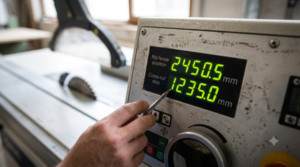
Why Digital Positioning Systems Add Genuine Value
Machines equipped with digital positioning displays allow operators to set precise cutting dimensions without relying purely on manual measurement and adjustment. This reduces both setup time and the risk of measurement error, particularly valuable when cutting numerous panels to identical dimensions throughout a single production run.
Matching Machine Choice to Production Volume
Not every workshop benefits from the most advanced, fully automatic sliding table saw available on the market, and understanding your actual volume needs prevents both overspending and underestimating requirements.
Questions worth asking before finalising your choice:
- How many panels does your workshop process on a typical daily basis?
- Is skilled operator labour readily available, or would automation reduce dependency?
- Does your available floor space accommodate a horizontal configuration comfortably?
- Will production volume likely increase significantly over the coming years?
A small workshop processing a modest daily volume rarely needs the same capacity as a large factory running continuous shifts. Matching machine capability honestly to actual demand avoids paying for automation and capacity that ultimately goes unused.
When Fully Automatic Options Genuinely Justify Their Cost
Larger operations processing high daily volume, particularly those fulfilling bulk orders with tight delivery timelines, generally benefit from fully automatic beam saws despite their higher upfront cost. The labour savings and improved consistency at that scale typically justify the additional investment within a reasonable timeframe.
Maintenance Considerations Across Different Types
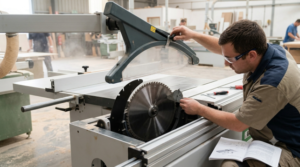
Regardless of which type you choose, understanding ongoing maintenance requirements helps set realistic expectations for total ownership cost.
Maintenance practices worth building into routine schedules:
- Regular blade sharpness checks and timely replacement when wear becomes noticeable
- Periodic calibration of digital positioning systems for continued accuracy
- Cleaning of dust and debris accumulation around cutting mechanisms
- Inspection of safety guards and emergency stop functionality
Neglecting these routine tasks, particularly blade maintenance, gradually degrades cutting accuracy in ways that often go unnoticed until downstream quality problems reveal the underlying cause.
Making a Well-Informed Final Decision
Choosing the right panel saw ultimately comes down to honestly assessing production volume, available floor space, and budget realistically, rather than being swayed purely by advanced features that may not genuinely suit your specific operation.
Conclusion
Selecting the right panel saw machine depends on understanding the genuine differences between manual, semi-automatic, and fully automatic types, then matching those options honestly to your workshop’s actual production volume and floor space constraints. Careful evaluation upfront prevents costly mismatches that affect production quality for years afterwards. At Garnet India, we help manufacturers choose panel machines precisely suited to their production needs, backed by genuine support long after the purchase is made.
Frequently Asked Questions
What type of panel saw suits a small workshop with limited floor space?
Vertical panel saws generally work well for smaller spaces, offering reasonable cutting capacity while occupying considerably less footprint than horizontal sliding table configurations.
Is a fully automatic panel saw necessary for every furniture manufacturing business?
Not necessarily; smaller workshops with moderate volume often find semi-automatic options perfectly adequate, while larger operations benefit more from full automation.
How does blade quality affect overall cutting performance?
Blade quality directly affects cut cleanliness and consistency, with poor quality blades causing chipping or splintering that undermines finish quality significantly.
What safety features should I prioritise when choosing a panel machine?
Prioritise reliable blade guards and easily accessible emergency stop functionality, since these features directly protect operators given the size and weight of panels handle