
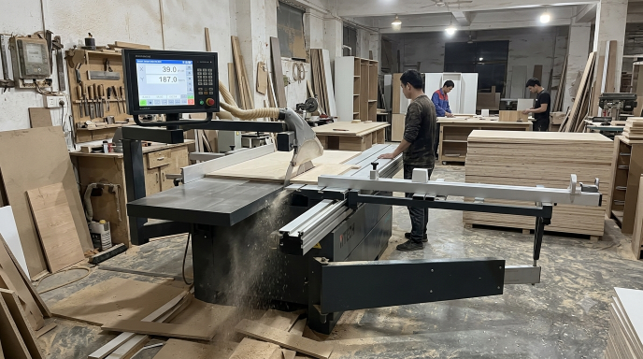
Two quotations landed on a workshop owner’s desk in Jaipur last year, both for panel saws with nearly identical specification sheets, yet one priced almost double the other. He called us confused, genuinely unsure whether the cheaper option was a steal or a trap. Understanding the Panel Saw Machine Price in India and what actually drives that number helps buyers avoid exactly this kind of confusion before signing any purchase order.
Why Panel Saw Prices Vary So Widely
Walk through any woodworking machinery exhibition and the price spread across similar-looking panel saws becomes immediately obvious. This variation isn’t arbitrary; it reflects real differences in build quality, automation, and manufacturing origin.
Core reasons behind this price variation:
- Level of automation, from manual sliding tables to fully programmable cutting sequences
- Build material quality, heavier steel frames costing more to manufacture
- Cutting capacity, larger maximum panel sizes generally command higher prices.
- Brand reputation and manufacturing track record within the industry
None of this means the highest priced option is automatically the right choice for every workshop. It simply means price alone shouldn’t be the only factor guiding a purchase decision.
What a Suspiciously Low Price Often Signals
A panel saw priced dramatically below comparable market options frequently cuts corners somewhere: thinner frame construction, weaker motors, or components sourced from unreliable suppliers. That initial saving sometimes turns into repair costs and downtime within the first year, undermining the entire point of buying budget in the first place.
Primary Factors That Determine the Final Cost
Before comparing quotes across different sellers, understanding what actually drives the number on that invoice helps buyers evaluate offers more accurately.
Key elements influencing panel saw pricing:
- Cutting capacity and maximum panel size; larger capacity machines cost proportionally more.
- Automation level: manual, semi-automatic, and fully automatic options span a wide price range.
- Precision and accuracy features, digital positioning systems, add to manufacturing cost.
- Motor power and blade quality: stronger, more durable components increase the base price.
A small workshop cutting standard-sized panels occasionally has entirely different requirements than a large factory processing hundreds of panels daily. Matching machine capability to actual production need prevents overspending on capacity that goes largely unused.
Manual Versus Automatic Panel Saws
This distinction alone creates one of the largest price gaps in this category. Manual panel saws require operator involvement at every cutting stage and cost considerably less upfront. Automatic versions handle positioning and cutting sequences with minimal manual intervention, justifying their higher price through labour savings and improved consistency over time.
Additional Costs Beyond the Machine Price
The number on an initial quotation rarely represents the complete financial picture. Several additional expenses typically appear after the purchase decision, and overlooking them leads to budget surprises down the line.
Costs frequently missed during initial budgeting:
- Installation and commissioning charges, sometimes bundled, sometimes billed separately.
- Operator training, essential for extracting full value from automated features
- Blade replacement and sharpening costs over the machine’s operational life
- Electricity consumption, particularly relevant for higher-powered automatic models
Factoring these ongoing expenses into total cost comparison gives a far more realistic picture than simply comparing two upfront quotation figures side by side.
Why Import Duties Affect Pricing Significantly
Panel saws imported from overseas manufacturers carry additional duties, shipping costs, and currency conversion factors that domestic manufacturers naturally avoid. This partly explains why comparable specifications from an established Indian manufacturer sometimes cost meaningfully less than an imported alternative, without necessarily compromising on build quality or precision.
How to Evaluate Whether a Price Is Fair
Rather than simply comparing numbers across quotations, a more structured evaluation approach genuinely helps determine whether a specific price represents fair value.
A practical approach to price evaluation:
- Request detailed specification breakdowns from at least three different sellers.
- Compare warranty terms and coverage duration alongside the base price.
- Ask specifically about spare parts cost and local availability.
- Request references from existing customers using the exact model under consideration.
Skipping that final step, speaking directly with an existing customer, is where many buyers later regret their purchase decision. Marketing brochures rarely mention the small recurring frustrations that only genuine daily use reveals honestly.
Negotiating Effectively With Sellers
Price negotiation in this industry carries more flexibility than most first-time buyers assume. Extended warranty periods, included spare blade sets, or bundled installation services often get added when buyers ask directly, rather than simply accepting the first quoted figure without further discussion.
Long-Term Value Versus Upfront Price
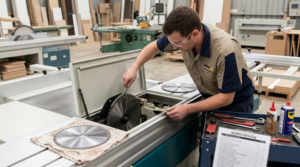
A panel saw’s purchase price represents only the starting point of what it actually costs to own over five or ten years of regular workshop use.
Ongoing value considerations worth factoring in:
- Frequency and cost of blade replacement or sharpening services
- Availability of trained technicians for repair work in your specific region
- Expected lifespan of key components under regular daily operation
- Resale value if the workshop eventually upgrades to a different model
A slightly higher upfront investment in a machine backed by strong local service support frequently proves more economical over time than a cheaper option with limited technician availability nearby when something eventually needs repair.
Making a Confident Purchase Decision
Choosing the right panel saw ultimately means balancing genuine production requirements against budget realistically, rather than defaulting to either the cheapest or most expensive option available without proper evaluation.
Conclusion
The price of a panel saw machine in India depends on considerably more than a single number quoted on an invoice; cutting capacity, automation level, build quality, and after-sales support collectively determine genuine long-term value. Taking time to evaluate these factors carefully leads to a purchase that serves your workshop reliably for years ahead. At Garnet India, we help manufacturers find panel saw machines that match their actual production needs, backed by pricing that reflects genuine build quality rather than inflated brand premiums.
Frequently Asked Questions
What is the typical price range for panel saw machines in India?
Prices vary considerably based on automation level and cutting capacity, ranging from more affordable manual options to significantly higher-priced fully automatic machines.
Does a higher-priced panel saw always guarantee better cutting accuracy?
Not automatically, though it often reflects stronger components and better calibration, which genuinely matters for consistent, precise cuts over the machine’s working life.
Are imported panel saws worth the additional cost compared to domestic options?
It depends on specific requirements, since established domestic manufacturers now offer comparable precision and quality at lower prices due to avoided import duties.
What ongoing costs should I budget for after purchasing a panel saw machine?
Plan for blade replacement, routine maintenance, operator training, and electricity consumption, since these expenses accumulate significantly over the machine’s operational lifetime.