
Edge finishing is a very important aspect of woodworking and panel processing in its modern form, in terms of durability and aesthetics of products. In case of production of modular furniture, cabinets, or decorative panels, the choice of the Edge banding machine clearly influences the productivity, the quality of finishing, as well as the efficiency of work. The edge banding solutions currently offered by manufacturers are usually either manual or automatic based on the size of production, budget, and the workflow needs. As long as the manual systems are flexible to small workshops, the automatic machines are precise and fast in industrial production. The knowledge of the difference between these two options assists furniture manufacturers, carpentry units, and panel processing businesses in selecting the most appropriate equipment to be used in its production unit.
Understanding Manual Edge Banding Machines
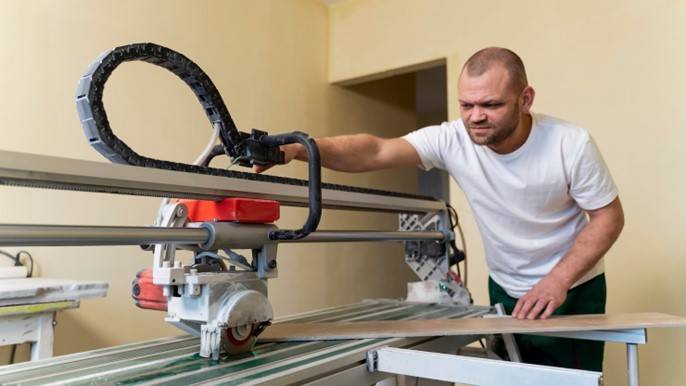
A Manual edge banding machine is usually created to fit in small workshops, carpenters and low volume manufacturing unit. These machines enable the operators to press the panel manually but with the assistance of the edge banding tape.
Manual systems are also easy, small and simple to use than fully automated solutions. Businesses that do not necessarily need the large-scale production at all times prefer them.
Key Features of Manual Machines
Manual systems generally include basic functionality such as:
- Glue application for bonding edge tape
- Manual panel feeding
- Basic trimming operations
- Compact structure suitable for smaller spaces
These machines are often used for custom furniture manufacturing where precision work is done in smaller batches.
Advantages of Manual Edge Banders
Manual equipment offers several benefits for entry-level woodworking businesses:
- Lower investment cost compared to automated machines
- Simple maintenance and minimal technical complexity
- Suitable for small furniture workshops or repair jobs
- Flexible for different panel sizes and custom projects
However, manual machines also require more operator effort and time, which can limit productivity.
Limitations to Consider
Manual systems may not be ideal for high-volume production environments. Some common limitations include:
- Slower processing speed
- Inconsistent finishing if operator skill varies
- Limited automation features such as trimming or polishing
For workshops aiming to expand production capacity, upgrading to automated equipment often becomes necessary.
What Is an Automatic Edge Banding Machine?
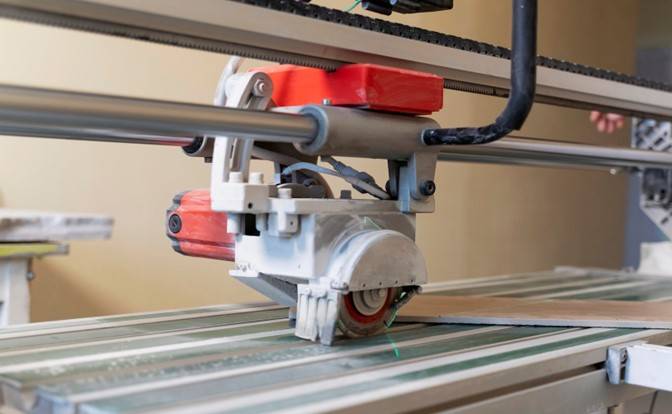
Automatic edge banding machine is developed in massive woodworking and production of modular furniture. These machines are used to carry out a series of operations within one continuous operation.
Modern automatic machines combine a number of processes, such as glue application, trimming, corner rounding and buffing to provide a uniform and high-quality finish.
Core Working Process
Automatic machines usually perform edge finishing in sequential stages:
- Panel feeding through conveyor systems
- Glue application and edge tape bonding
- Trimming excess banding material
- Edge polishing and finishing
Advanced systems may also include Automatic edge banding with premilling and corner rounding, which improves bonding accuracy and surface smoothness.
Benefits of Automatic Edge Banding Systems
Automated machines offer several advantages for medium and large manufacturing units:
- High production speed with minimal manual effort
- Consistent edge finishing across large batches
- Integrated functions such as trimming and polishing
- Reduced labor dependency and improved productivity
Because of these capabilities, automated equipment is widely used in modular furniture factories and industrial woodworking plants.
Manual vs Automatic Edge Banding – Key Differences
Understanding the differences between manual and automatic machines helps businesses make a practical investment decision.
- Capacity of production: The manual system is developed towards small production volumes. On the contrary, automatic machines can process items in large scale continuously.
- Finishing Quality: The manual equipment has the potential of doing well, but very much depends on the skill of the operator. Automated systems offer even edge finishing that is trimmed and polished to a straight cut.
- Investment and Cost: The initial cost of the manual machines is low; hence it is used in the workshops that are of small scale. Automatic machines have greater investment but offer a great production efficiency in the long run.
- Efficiency in Operations: Labor dependence is minimized because the equipment is automated, and the processing becomes faster. Manual systems are demanding more labor and time on every panel.
When Should You Choose a Manual Machine?
Manual machines are a good option in certain situations.
- Small carpentry workshops with limited production
- Custom furniture manufacturing units
- Businesses starting in woodworking with a limited budget
- Workshops focusing on repair or small panel work
These machines provide flexibility without requiring large capital investment.
When Is an Automatic Machine the Better Choice?
Automatic systems are better suited for businesses with higher production requirements.
- Modular furniture manufacturing units
- Industrial woodworking factories
- Companies handling bulk panel processing
- Businesses focused on consistent finishing quality
Automatic machines help maintain uniform product quality while increasing production speed.
Choosing the Right Machine for Your Business
Selecting between manual and automatic equipment depends on several operational factors.
- Production Volume: Businesses with high daily output should consider automated solutions for faster processing.
- Workspace and Infrastructure: Automatic machines typically require larger installation areas and stable power supply systems.
- Budget Planning: While manual machines are economical initially, automated systems provide better long-term productivity for growing businesses.
- Product Type: Companies producing modular furniture or laminated panels often benefit from automated edge finishing systems.
By evaluating these factors, manufacturers can determine which equipment best supports their production goals.
Conclusion
Both the automated and manual edge banding machines have a significant purpose in furniture production and woodworking. The manual machine is low cost and flexible to use in smaller workplaces whereas the automatic machine is efficient, precise and can produce in large quantities. The decision taken relies on the needs of production, budget available and the long-term objectives of the business.
As a manufacturer intending to modernize its woodworking business with trusted machines offerings, Garnet India can offer high-quality equipment that is capable of aiding the small workshop as well as industrial furniture manufacturing.
Are you planning to upgrade your workshop with a more efficient edge banding solution?
FAQs
Q.1 What is the difference between manual and automatic edge banding machines?
Manual machines need operators to feed the panels and apply edge tape, whereas automatic machines do the whole task on automated systems, which is better in speed and accuracy.
Q.2 Are manual edge banding machines suitable for furniture workshops?
Yes, manual machines are often employed in small-scale furniture work or small-scale custom woodworking companies where volume of production is low.
Q.3 What industries use automatic edge banding machines?
One of the main areas of application of automatic machines is modular furniture production, panel processing plants, cabinet production plants, and industrial woodworking.
Q.4 How do I choose the right edge banding machine for my business?
The correct machine is determined by the size of production, space at the working area, budget, and the kind of furniture or panels being produced. Automated systems tend to favor businesses that require more production.